No. A shower filter does not soften water. A shower filter reduces chlorine. Hardness — the calcium and magnesium dissolved in your water — passes straight through a shower filter, so the water stays hard.
That is the short answer, and it is the most important thing on this page. Most of the confusion about shower filters comes from mixing up two different problems — chlorine and hardness — and from brands that blur the line between them. This page keeps the two apart.
Chlorine and hardness are two different things
Chlorine is a chemical added to municipal water to keep it safe. It is a disinfectant: the city adds it so the water stays clean on its way to your home. In a hot shower, chlorine comes out of the water as a gas — that is the sharp smell some people notice, and the reason a shower filter exists at all.
Hardness is a measure of dissolved minerals, mainly calcium and magnesium, that come from the ground your water travels through. Hard water leaves white spots on glass, scale in a kettle, and a film on shower doors. It makes soap harder to lather and laundry stiffer. Those minerals are not added by anyone; they are in the water because of where it comes from.
A shower filter and a water softener solve different problems. A filter deals with chlorine. A softener deals with hardness. Nothing small enough to screw onto a shower arm can do both.
How to tell which problem you have
Chlorine shows up as a smell — sharp, like a swimming pool — especially in a hot shower. If the smell bothers you, or your skin feels tight and dry after showering, chlorine is the likely problem, and a shower filter is the right tool.
Hardness shows up as spots and scale: white crust on taps and shower doors, limescale in the kettle, soap that will not lather, laundry that comes out stiff. If that is your problem, a shower filter will not help — you need a water softener, not a filter.
Many homes have both problems at once. That does not change the answer: a filter handles the chlorine, a softener handles the hardness. They are two tools, not one.
What a shower filter does
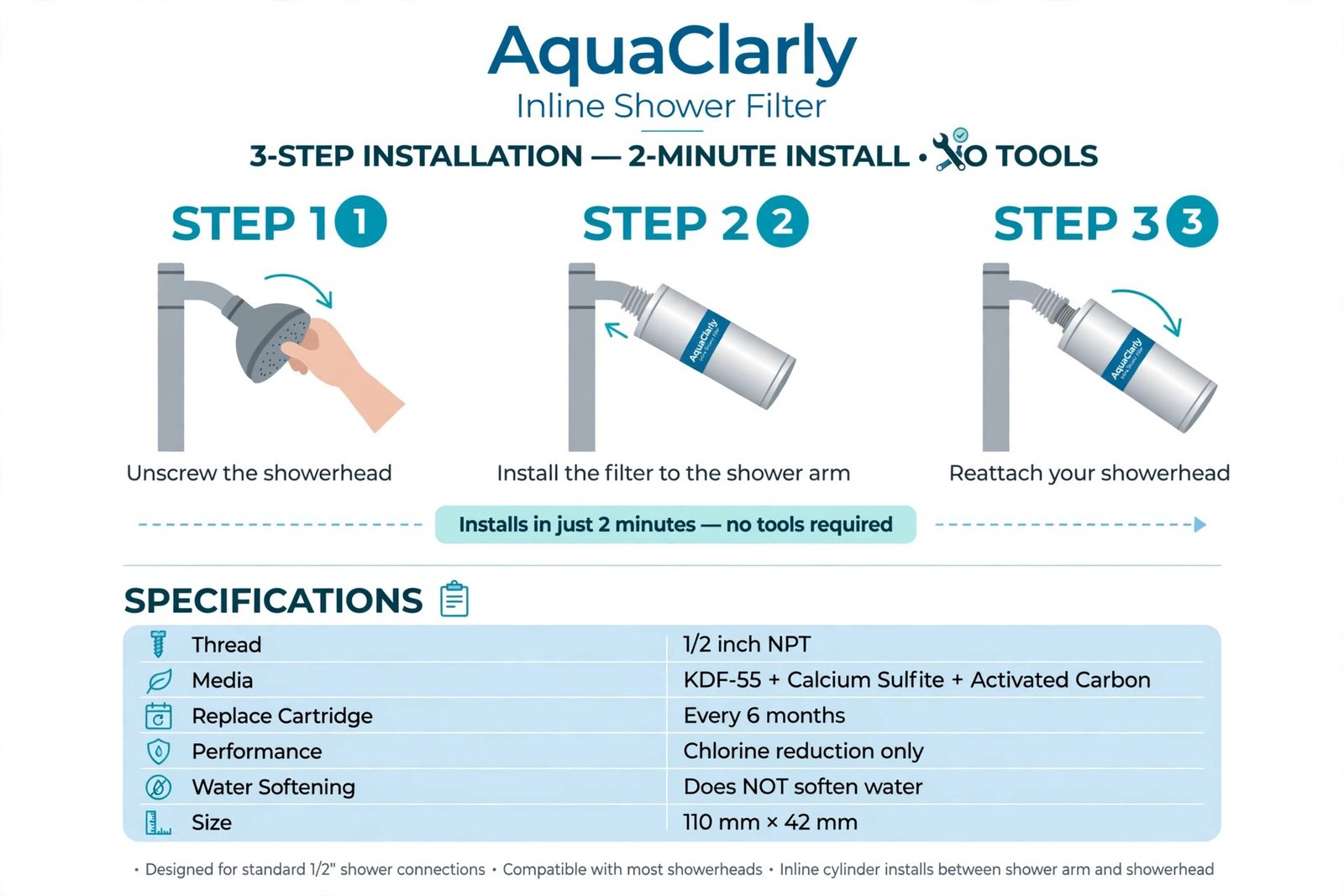
An inline shower filter sits between your shower arm and your showerhead. Water passes through the filter cartridge, which reduces chlorine before the water reaches you. It installs in about 2 minutes, needs no tools, and you keep your own showerhead.
Inside the AquaClarly cartridge is a blend of KDF-55, calcium sulfite and activated carbon. That media reduces free chlorine — the disinfectant in municipal tap water. The cartridge lasts 6 months, then you swap it for a new one. A replacement cartridge is $24.
What you get is simple: less chlorine in your shower water, with the showerhead you already own. Nothing more is promised.
What a shower filter does not do
A shower filter does not soften water. It does not remove hardness, calcium, or magnesium. It does not change the mineral content of your water, and it makes no medical claims — it will not treat skin conditions or hair loss.
It does not remove chloramine either. Chloramine is a different disinfectant some cities use instead of free chlorine, and a standard shower filter cartridge is not built for it. If your city uses chloramine, check your water report first — a filter for free chlorine is not the right tool.
We do not publish removal percentages. A percentage without a test condition — flow rate, water temperature, cartridge age — is a marketing number, not a measurement. Any brand that quotes a percentage without saying how it was measured is selling the number, not the result.
How to test your water
You do not have to guess. Three ways to find out what is in your water:
- Chlorine test strips. Dip a strip in the shower water and compare the colour to the chart. Our Chlorine Test Strips ($12, 50 strips) measure free chlorine. Test before the filter and after it to see the difference.
- Your city’s water report. Every municipal supplier in the US publishes a water quality report. It lists whether the disinfectant is free chlorine or chloramine, and how hard the water is.
- A hardness test. A simple hardness test strip or a look at your kettle will tell you whether hardness is a real problem in your home. White scale means hard water.
When you need a water softener instead
If your problem is limescale on taps and shower doors, stiff laundry, or soap that will not lather, that is hardness — and only a water softener (or another whole-home treatment) addresses it. A shower filter is the right choice when your concern is chlorine in your shower water.
A softener is a whole-home system: it treats all the water in the house, costs far more than a shower filter — typically $1,000 or more installed — and needs salt and maintenance. A shower filter is a $59 inline cylinder you screw on in 2 minutes. They are not competing products; they are different tools for different problems. Read our comparison: Shower Filter vs Water Softener.
What to do next
If chlorine is your problem, the next step is simple: AquaClarly Inline Shower Filter ($59, replacement cartridge $24 every 6 months). It fits standard 1/2 inch NPT shower arms, installs in about 2 minutes, and you keep your own showerhead.
Related: AquaClarly home · Shower Filter vs Water Softener · How to Install a Shower Filter in 2 Minutes · Shower Filter FAQ.